

Finding the perfect car feels like a victory until the reality of financing sinks in. While national lenders spend millions on flashy ads, savvy borrowers are discovering that community bank auto loan rates offer a more personalized path to ownership. These local institutions prioritize relationships over algorithms, often providing lower fees and more competitive interest tiers than corporate giants.
However, a great rate is only half of the equation for a smart buyer. That’s where things change understanding the true cost of borrowing requires a deep dive into your monthly installments. By visualizing exactly how every dollar is distributed, you ensure your good deal on paper is actually a sustainable plan for your future.
Comparison: Community Banks vs National Lenders
| Feature | Community Banks | National Banks |
| Loan Decisioning | Based on local history and context | Strictly automated credit scoring |
| Service Fees | Generally lower than large institutions | Often higher due to overhead |
| Customer Experience | High satisfaction and personalized | Standardized and automated |
| Market Focus | Local community reinvestment | Nationwide corporate growth |
Decoding the Math of Your Monthly Payment

The sting of a high interest loan can linger for years, draining your budget and limiting your financial freedom. To combat this, you must look beyond the initial APR and focus on the total interest paid over the life of the agreement. Community banks often provide fixed rate financing that protects you from market volatility, keeping your payment predictable from the first month to the last.
For example, a slight decrease in your percentage rate can save you thousands over a five year term. But don’t just take a lender’s word for it; you should verify the numbers yourself to maintain complete control. Using a financial repayment tool allows you to input various scenarios, such as adjusting your down payment or shortening the loan tenure. This preparation turns a complex negotiation into a simple, data driven decision.
Why Small Banks Beat National Competitors

The spark of a better deal usually lies in the lower overhead costs and local focus of smaller institutions. Unlike big banks that use rigid scoring, community lenders often consider your broader financial picture and local reputation. This flexibility frequently leads to better debt to income ratio considerations, allowing for smoother approvals and more attractive terms for the average borrower.
Leveraging Local Relationships for Flexible Approvals
The human element is a community bank’s strongest asset in a world of cold algorithms. While a national bank might deny a request based on a single credit score, local lenders are known for relationship based banking that takes your history into account. This means a borrower rebuilding credit or having a unique financial situation might find an underwriter willing to look beyond just a number.
Pitching Your Story to a Local Banker
Establishing a connection before you apply can change the trajectory of your loan approval. By maintaining a steady deposit history or a checking account at a local branch, you build a symbiotic relationship that makes you a person rather than just a file. Local teams often move faster on decisions because they keep communication direct and understand the specific needs of their neighbors.
Avoiding the 2026 Long Term Debt Trap
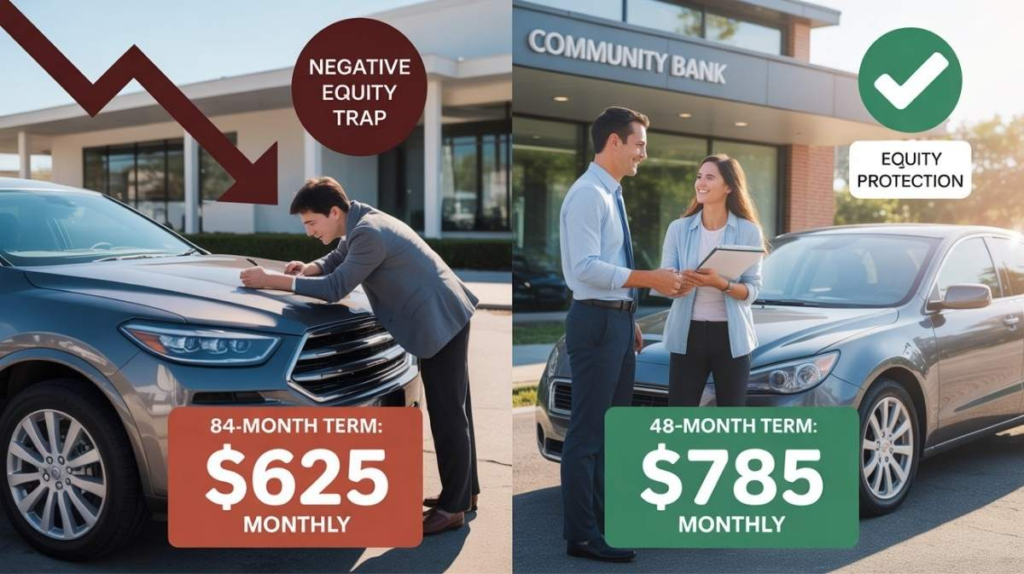
The hidden danger in today’s car market is the rise of negative equity, which reached near record levels in early 2026. Many buyers are choosing longer loan terms of 72 or 84 months to keep monthly payments low, but this often causes the car to depreciate faster than the loan is paid off. Choosing community bank auto loan rates with shorter, more responsible terms helps ensure you don’t end up “underwater” on your investment.
The Danger of Rollover Debt
Rolling over debt from a previous car into a new loan is a trap that currently affects nearly a third of all trade ins. This leads to record high monthly payments and financing totals that far exceed the vehicle’s actual value.
To stay safe, focus on a loan that aligns with the car’s lifespan and use a repayment breakdown to see when you will actually own the car outright.
Also Read: The Complete Guide to Extra Principal Payments
The Strategic Power of Rate Locks
Many borrowers lose sleep over fluctuating market conditions while they are still shopping for their dream vehicle. A major gap in most car buying guides is the failure to mention loan rate locks, which many community lenders offer to local customers.
By securing a specific rate early, you protect yourself against sudden spikes, ensuring your auto financing options remain favorable regardless of economic shifts.
Navigating the Add on Interest Trap

The hidden sting of a car loan often isn’t the interest rate itself, but the “add on” products bundled into the principal balance at the dealership. When you secure community bank auto loan rates beforehand, you gain the leverage to decline overpriced gap insurance or extended warranties that bloat your amortization table. This pre approval process ensures that your monthly payment remains focused on the car’s value rather than high margin dealer extras.
Understanding the Amortization Breakdown
Many people ignore the technical side of their debt, only to realize later how much they are overpaying in the early years. An amortization table reveals the “interest heavy” nature of early payments, which is crucial if you plan to trade in your car early. By seeing the balance drop month by month, you gain the topical authority needed to manage your debt effectively and potentially save through early payoffs.
Credit Union vs Bank: Which Wins?
When comparing community bank auto loan rates against credit unions, the winner often depends on your specific membership eligibility and the current local market. While both offer a community centric approach, banks often provide more robust digital tools and diverse auto financing options. Researching both ensures you aren’t leaving money on the table when it’s time to sign the dotted line.
Conclusion: Driving Away with a Better Deal
Choosing the right lender is just as important as choosing the right vehicle. By focusing on local institutions and verifying your potential savings, you position yourself as an expert borrower. Remember, the goal isn’t just to get a car; it’s to secure a financial arrangement that supports your lifestyle without hidden surprises.
Frequently Asked Questions
How long can I lock in a rate?
Most local lenders offer a 30 to 60 day rate lock. This protects your fixed rate financing from market hikes while you finalize your vehicle purchase.
Are there penalties for early repayment?
Unlike dealer financing, community banks rarely charge “pre payment penalties.” This allows you to reduce total interest paid by paying off your principal faster.
Do these rates apply to used cars?
Yes, though used rates are slightly higher than new ones. Local banks are often more flexible with older models that national lenders might reject.
What down payment gets the best rate?
A 10–20% down payment usually unlocks the lowest annual percentage rate (APR). This improves your loan to value ratio and lowers your monthly risk.
Will shopping around hurt my credit?
No. Multiple inquiries for auto financing options within a 14 day window are treated as a single “hard pull, protecting your overall credit score.